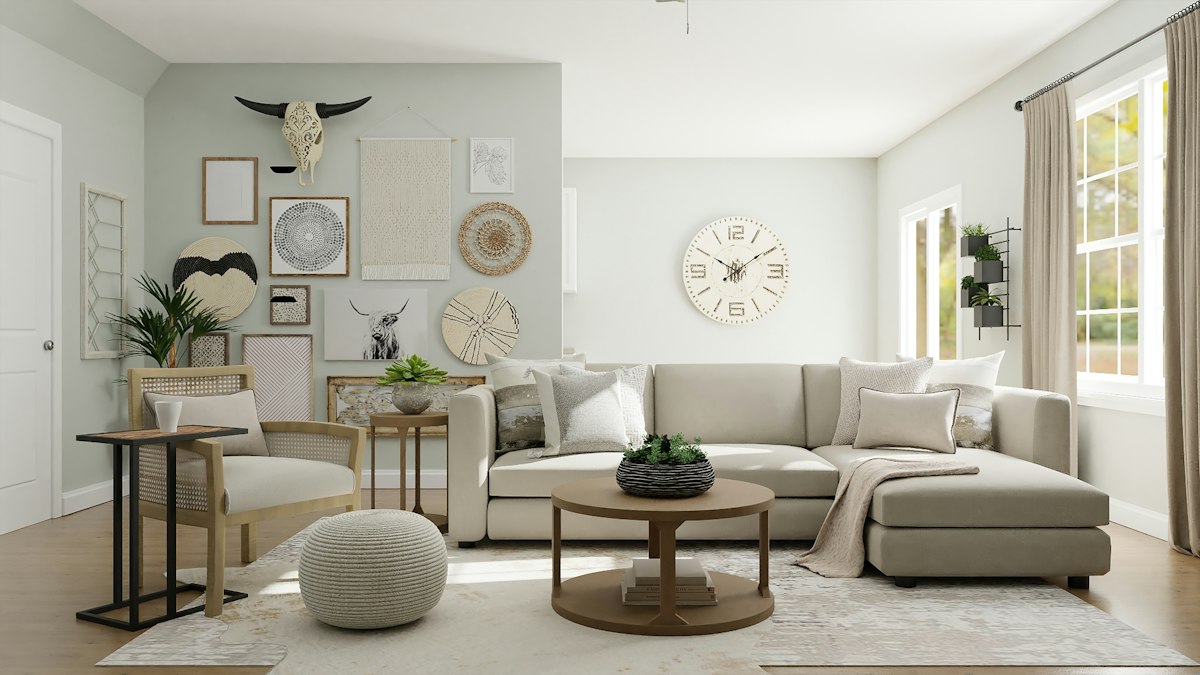
Two years ago, most homeowners in Delhi NCR planned their interiors with a mood board, a few hand-drawn layouts, and a lot of imagination. Today, AI interior design India tools let you generate a photorealistic render of your living room before a single tile is laid, test five colour schemes in minutes, and get a floor plan that accounts for your exact furniture dimensions. This is not a distant trend — it is already changing how design firms and homeowners across India scope, visualize, and execute projects.
At the same time, AI is not replacing the designer's eye — it is removing the guesswork that used to eat up weeks of back-and-forth. This guide looks at where AI genuinely helps in Indian home and office interiors, where it still falls short, and how to use these tools without losing the personal, lived-in feel that makes a house a home.
What "AI Interior Design" Actually Means in 2026
The term covers a broad set of tools, and it helps to separate them clearly. Generative design tools take a room's dimensions and your style preferences and produce full layout and décor suggestions. Visualization tools turn a 2D floor plan or a handful of reference photos into a photorealistic 3D render or walkthrough. Space-planning algorithms test dozens of furniture arrangements against traffic flow and natural light in seconds. And smart home platforms use AI to automate lighting, climate, and security based on how a household actually behaves.
None of these tools work in isolation. The most useful AI interior design India workflows combine two or three of them — say, a space-planning tool to lock the layout, followed by a visualization tool to preview finishes — with a human designer curating the final result.
AI-Powered 3D Visualization and Virtual Walkthroughs
This is the area where AI has made the most visible difference for Indian homeowners. Instead of imagining how a proposed sofa colour or wall panelling will look, clients can now walk through a rendered version of their own home before construction begins.
- Photorealistic renders from a floor plan: Upload room dimensions and reference images, and AI tools generate multiple finished-look renders in different styles within hours instead of the days a traditional 3D artist would need.
- Material and colour swaps in real time: Homeowners can test a marble floor against a wooden one, or a muted palette against a bold one, on the same rendered room, which removes a huge source of mid-project indecision and change orders.
- Virtual walkthroughs for NRI and out-of-town clients: For clients managing a Delhi NCR renovation from abroad, an AI-generated walkthrough video is often the deciding factor in approving a design without an in-person site visit.
The real value of AI visualization isn't the render itself — it's the number of expensive on-site changes it prevents once construction actually starts.
Smarter Space Planning and Furniture Layout
Space planning is where AI quietly does some of its most useful work, particularly for the compact 2BHK and 3BHK apartments common across Delhi NCR. Algorithms can test how a room performs across dozens of furniture arrangements — accounting for door swings, window placement, and walking paths — far faster than manual trial and error.
For homeowners who want the underlying principles before trusting a tool's output, our furniture layout guide for Indian homes covers the fundamentals of flow, focal points, and scale that any good AI space-planning suggestion should respect.
- Automated clearance checks: AI tools flag when a proposed layout leaves too little walking clearance around a dining table or blocks a wardrobe door — a common miss in compact Indian apartments.
- Multi-scenario comparison: Instead of choosing between two layouts, homeowners can compare five or six AI-generated options side by side and pick the one that best matches how the family actually uses the room.
- Style matching: Many tools can analyse a Pinterest board or a set of reference photos and suggest a layout and furniture set that matches that aesthetic — useful groundwork before finalising a design direction, which our interior design styles guide can help you narrow down further.
AI and Smart Home Integration for Indian Households
Smart home automation India adoption has accelerated well beyond voice-controlled lights. AI-driven systems now learn household routines and adjust automatically, which matters a great deal in a climate as variable as Delhi NCR's.
- Adaptive climate control: AI thermostats learn when a family is typically home and pre-cool or pre-heat rooms accordingly, which can meaningfully reduce electricity bills during peak summer months.
- Circadian lighting: Smart lighting systems shift colour temperature through the day automatically — warmer in the evening, cooler and brighter during work hours — without the household manually adjusting settings.
- Predictive security: AI-enabled cameras and sensors distinguish between routine household movement and genuine anomalies, cutting down on false alerts compared to older motion-sensor systems.
- Voice and app-based control hubs: A single AI-driven hub can now manage lighting, curtains, and appliances together, which is increasingly being built into new Delhi NCR apartment developments as a standard offering rather than a premium add-on.
AI-Assisted Budgeting and Material Recommendations
Budgeting is one of the most stressful parts of any renovation, and AI tools are starting to help here too — by cross-referencing material choices, room dimensions, and regional pricing data to generate more accurate cost estimates before work begins.
- Material cost comparisons: AI tools can instantly compare the lifetime cost of vitrified tiles versus marble, or laminate versus veneer, factoring in maintenance and durability rather than just upfront price.
- Sustainable material suggestions: Several platforms now flag lower-impact material alternatives automatically. If eco-friendly choices matter to your project, our sustainable interior design guide pairs well with this kind of AI-assisted material screening.
- Scope-based estimates: Instead of a single lump-sum quote, AI-assisted estimation tools can break down projected costs by room and category, making it easier to identify where a project can flex if the overall budget needs trimming.
Where AI Still Falls Short — and Why Human Designers Matter
For all its usefulness, AI interior design India still has real limitations, and it is worth being honest about them before over-relying on any tool.
- It doesn't understand a family's actual habits: AI can suggest a technically optimal layout, but it has no way of knowing that your family always eats in front of the television, or that your in-laws visit every weekend and need a proper seating arrangement.
- It struggles with vastu and cultural nuance: Most mainstream AI design tools are trained on global datasets and have little grounding in vastu shastra principles that matter to a large share of Indian homeowners.
- Renders can oversell a look: A photorealistic AI render under perfect lighting conditions does not always translate faithfully to how a material or colour will actually appear in a room with Delhi NCR's natural light and dust conditions.
- It cannot manage vendors, timelines, or site issues: The unglamorous but essential parts of an actual renovation — coordinating carpenters, electricians, and painters, and adjusting on the fly when something doesn't go to plan — still require an experienced human project manager.
How to Use AI Tools Without Losing the Personal Touch
The homeowners getting the most value from AI right now are using it as a starting point rather than a final answer. A useful approach is to let AI handle the repetitive, data-heavy parts of the process — generating layout options, comparing material costs, producing quick visualizations — while keeping a human designer in charge of the decisions that require genuine judgement about how a family actually lives.
- Use AI-generated layouts and renders as a first draft to react to, not a final brief.
- Bring in a designer to check any AI suggestion against vastu preferences, family routines, and how the space will be used day to day.
- Treat AI cost estimates as a planning tool, and confirm final numbers with an actual site visit and vendor quotes before committing.
AI interior design India is best understood as a powerful new set of tools that speed up the parts of a project that used to take the longest — visualization, layout testing, and cost comparison — while leaving the parts that require real understanding of a family and a space firmly in human hands. At Re:Room, we use these tools to move faster through the early design stages, so our designers can spend more time on the details that actually make a house feel like yours.
Ready to transform how your home feels?
Our designers combine AI-powered visualization and planning tools with hands-on expertise to design homes that fit exactly how your family lives. Let us help you get it right the first time.
Book a Free ConsultationFrequently asked questions.
Can AI actually design my home's interior in India?
AI tools can generate layout options, photorealistic renders, and cost comparisons, but they don't understand a family's actual habits — whether you eat in front of the TV or need seating for weekend in-laws — and most mainstream tools have little grounding in vastu principles that matter to many Indian homeowners. The best results come from using AI as a first draft, with a human designer curating the final result.
How is AI used for 3D visualization in Indian home interiors?
AI tools generate photorealistic renders from room dimensions and reference photos within hours instead of the days a traditional 3D artist would need, let homeowners test material and colour swaps in real time, and produce walkthrough videos that are often the deciding factor for NRI or out-of-town clients approving a design remotely.
Can AI help with interior design budgeting in India?
Yes — AI tools can cross-reference material choices, room dimensions and regional pricing to generate more accurate estimates, compare the lifetime cost of options like vitrified tiles versus marble, and break projected costs down by room and category. These estimates should be treated as a planning tool and confirmed with an actual site visit and vendor quotes before committing.
What can't AI do in an interior design project?
AI cannot manage vendors, coordinate carpenters and electricians, or adjust on the fly when something doesn't go to plan on-site — that still requires an experienced human project manager. It also tends to oversell a look in perfect render lighting that doesn't always translate to how a material looks under Delhi NCR's actual natural light and dust conditions.