Home office interior design in India has gone from a niche concern to an urgent priority in a few short years. What began as a pandemic-era improvisation — a laptop on the dining table, a chair from the drawing room, a curtain drawn behind the head for video calls — has become a permanent feature of how millions of professionals in Delhi NCR and across India now work. Yet most Indian homes were never designed with a dedicated workspace in mind, and the improvised setups of 2020 have persisted long past the point where they should have been replaced with something better.
A well-designed home office does not require a spare room or a large budget. It requires clear thinking about function, ergonomics, light, and how the workspace integrates with the rest of the home. This guide covers everything you need to make that happen — from choosing the right location to the final coat of paint on the walls.
Why Home Office Design Deserves Serious Attention
Poor workspace design has measurable consequences. Back pain, eye strain, poor concentration, and the creeping sense that the workday never really ends are all closely linked to the physical environment in which you work. Research consistently shows that people who work in well-organised, well-lit, dedicated spaces are more productive, make fewer errors, and report lower stress than those working from shared or improvised spaces.
For professionals in Delhi NCR managing client calls, long hours at the screen, and the competing demands of a household, the difference between a thoughtfully designed home study room and a makeshift corner is not cosmetic — it is felt every single working day. The investment in getting the workspace right pays back quickly and continuously.
The best home office is one that feels like work when you sit down at it, and disappears from your mind entirely when you leave it. Design is what creates both of those feelings.
Choosing the Right Location for Your Home Office
Before furniture, storage, or colour, the first decision in home office interior design in India is where the workspace goes. Not all rooms — or corners — are equally suited to focused work, and the location you choose will determine most of what follows.
- Prioritise natural light from the north or east: North-facing windows provide steady, glare-free daylight throughout the day — ideal for screen-based work. East-facing windows give bright morning light that shifts to indirect light by afternoon. West-facing positions get harsh direct afternoon sun, particularly brutal in Delhi summers from April through September.
- Distance from household activity zones: In a 2BHK or 3BHK apartment, the kitchen and living room are the main sources of ambient noise. If possible, place the study toward the end of the apartment furthest from these areas. A bedroom converted to a home office has a natural noise buffer.
- Visibility from shared spaces: If your video calls frequently show your background, consider what the camera sees. A wall with a simple bookshelf or a clean painted surface is far more professional than a doorway into the kitchen or a cluttered bedroom corner.
- Dedicated door: A door you can close matters more than most people admit. The psychological transition of entering and leaving a workspace — even a small one — is a genuine productivity tool. If you are converting a room, this is your primary advantage.
If a dedicated room is not available, a dedicated corner can work well — but it must be truly dedicated. A desk pushed into the bedroom or living room that is also used for non-work activities loses much of its effectiveness as a workspace. Use storage, a partial wall, or a shelving unit to create a visual boundary.
Desk Placement and Ergonomics: The Foundation
Ergonomics is the most practically important element of home office interior design in India and the most commonly ignored. Musculoskeletal problems from poor workstation setup are endemic among Indian work-from-home professionals, and they accumulate slowly — a slightly wrong chair height or monitor position causes no acute pain initially, but leads to significant discomfort over months of daily use.
Desk height and monitor position
- Standard desk height is 72–75 cm for most adults. If you are taller than 5'10" or shorter than 5'3", a height-adjustable desk is worth the investment — they are now available from Indian brands like Durian and Featherlite at reasonable price points.
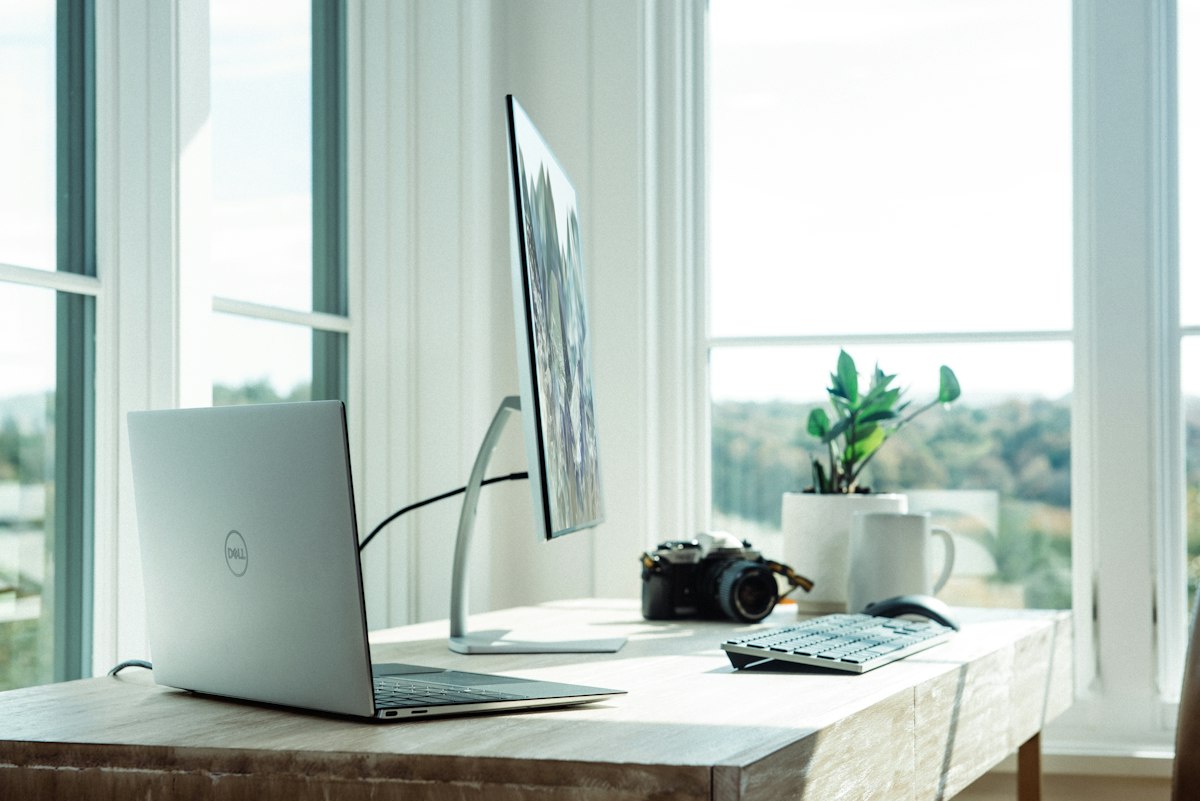
- The top of your monitor should be at or slightly below eye level, and the screen should be approximately an arm's length away (55–65 cm). If you use a laptop as your primary screen, a separate monitor or a laptop stand plus an external keyboard and mouse is non-negotiable for posture.
- Position the desk so that the window is to your side rather than directly behind or in front of you. A window directly behind creates glare on the screen; directly in front causes you to squint against bright light.
Chair selection
An ergonomic chair is the single most important purchase in any home office. It should have adjustable seat height, lumbar support, and armrests. You do not need to spend ₹30,000 on a Herman Miller — mid-range options from Godrej Interio, Green Soul, and Featherlite offer solid ergonomic support at ₹8,000–₹18,000. What you should avoid is using a dining chair or a sofa for more than a few hours: neither provides adequate lumbar support for sustained desk work.
Storage Solutions for a Clutter-Free Home Study
Clutter is one of the most significant inhibitors of focus, and home offices in India tend to accumulate it quickly — printed documents, stationery, cables, books, and the general overflow of household life into what should be a dedicated workspace. Good storage planning is therefore a core part of home office interior design in India, not an afterthought.
- Floor-to-ceiling shelving: A wall-mounted shelving unit running from floor to ceiling makes the most of vertical space — especially important in smaller apartments. Open shelves work well for books, plants, and display items; closed cabinets below the desk handle documents and equipment that is better hidden.
- Under-desk drawer units: A pedestal drawer unit on castors fits under most desks and provides immediately accessible storage for stationery, chargers, and everyday files without requiring you to leave the workstation.
- Cable management: Cable chaos is both visually distracting and practically inconvenient. A cable tray mounted under the desk, cable clips along the back edge, and a single power strip mounted out of sight will eliminate most of the tangle. Wireless peripherals — keyboard, mouse, and speaker — reduce cable burden further.
- Paper management: India's business culture still generates significant paper — invoices, contracts, correspondence. An A4-size document sorter on the desk for active papers, plus a filing cabinet or labelled box files for archives, is the minimum viable paper system.
Lighting Your Home Office for Focus and Eye Comfort
Lighting is one of the most common sources of fatigue and eye strain in home offices, and also one of the easiest to fix. The principles of layered home lighting apply here, with some specific considerations for a work environment.
- Desk task lamp: This is the most important single lighting purchase for a home office. A good adjustable desk lamp — positioned to the left for right-handed users — eliminates shadows on the working surface and reduces dependence on overhead light. Look for lamps with adjustable colour temperature (warm for evenings, cool-white for daytime focus) and a high CRI rating of 90 or above.
- Overhead ambient light: Use a ceiling fixture on a separate switch from the desk lamp, so you can control each independently. A neutral white (4000K) colour temperature suits focused daytime work; cooler temperatures (5000K) can feel harsh over long sessions.
- Avoid monitor glare: Position ceiling lights so they do not reflect on your screen. If this is unavoidable with your room layout, a matte anti-glare screen filter is an inexpensive fix.
- Bias lighting: An LED strip placed behind the monitor creates a soft halo of light that reduces the contrast between the bright screen and the dark surrounding wall — significantly reducing eye strain during long screen sessions. Use a warm-neutral strip at low brightness for this purpose.
Colours and Finishes for the Home Study Room in India
Home office interior design in India should take colour seriously — it directly influences mood, energy levels, and the psychological sense of being in a productive versus relaxed space.
- Soft neutrals and greens for sustained focus: Sage green, warm grey, and off-white are consistently associated with calm, sustained concentration. They are also forgiving backgrounds for video calls, making your image look natural and professional on camera.
- Avoid highly saturated colours on the main wall: Bold colours — deep red, bright orange, or electric blue — create energy and excitement but also visual fatigue over a long workday. Reserve them for an accent wall or accessories rather than the wall your eyes rest on all day.
- Matte finishes for walls: Matte paint reduces light reflection, which matters in a workspace where screen glare is already a concern. Avoid gloss or semi-gloss finishes on walls opposite or behind the monitor.
- Natural wood elements: A teak or oak-finish desk surface, wooden shelving, or even a small wood-topped side table brings warmth and organic texture that prevents the home office from feeling sterile. This is particularly effective in apartment offices where every surface might otherwise be white laminate.
When choosing colours, also consider the psychology of colour for different types of work. Creative professionals may benefit from a slightly warmer, more energetic palette; those doing analytical or financial work tend to perform better in cooler, calmer environments.
Acoustic Privacy in Indian Apartments
Noise is one of the defining challenges of home office work in Indian urban settings. Delhi NCR apartments frequently contend with traffic noise, neighbours, construction, and the sounds of a busy household — all of which compete with concentration and professional-sounding video calls.
- Heavy curtains and soft furnishings: A room with hard surfaces — tile floors, painted walls, bare ceiling — has significantly more reverberation than one with soft elements. A large area rug, heavy curtains, and upholstered seating absorb ambient sound and improve both acoustics for calls and background noise reduction.
- Solid-core door: If you are converting a room, specify a solid-core door rather than a hollow-core one. The acoustic difference is significant and the cost difference is modest.
- Acoustic panels: For serious noise problems, fabric-wrapped acoustic panels mounted on the wall behind the desk can make a measurable difference to room acoustics. They are available from specialist suppliers in Delhi and can be covered in fabric that matches the room's design scheme.
- Noise-cancelling headphones: No interior design solution eliminates all external noise in a busy Indian home. A good pair of noise-cancelling headphones handles the rest — they are the most practical and portable solution for concentration when the environment is beyond your control.
Making a Small Space Work as a Home Office
Not every Delhi NCR apartment has a room to spare. Many professionals work from a corner of the bedroom, a landing area, or a converted balcony. These constraints are entirely workable with the right approach.
- Wall-mounted fold-down desk: A Murphy-style fold-down desk mounts flush to the wall and folds out to provide a full work surface when needed, then disappears when not in use. This is ideal for a bedroom corner where the desk would otherwise dominate the room's restful character.
- Nook conversion: An alcove, staircase undercut, or corridor dead-end can be converted into a compact but functional workstation. Built-in shelving above and to the sides of the desk maximises storage without consuming floor space.
- Room dividers: A bookshelf, a slatted wood screen, or a floor-to-ceiling curtain track can create a visual — and psychological — boundary between the work zone and the living zone in an open-plan space, without requiring construction.
- Vertical space: In a small home office, every centimetre of wall height is valuable. Shelves mounted above the desk, pegboards for organising stationery and tools, and wall-mounted monitor arms all free up the desk surface and the floor.
Home Office Interior Design Checklist for Indian Homes
Whether you are designing a dedicated home office from scratch or upgrading an existing setup, use this checklist to ensure you have addressed the essentials of home office interior design in India:
- Location: North or east-facing natural light, furthest from household noise, with a door that closes.
- Desk and chair: Correct height desk, ergonomic chair with lumbar support, monitor at eye level with arm's-length distance.
- Storage: Floor-to-ceiling shelving, under-desk drawer unit, cable management, paper filing system.
- Lighting: Adjustable desk task lamp (high CRI), dimmable ambient ceiling light, bias lighting behind monitor, no glare on screen.
- Acoustics: Area rug, heavy curtains, solid-core door, acoustic panels if needed.
- Colour: Soft neutral walls (sage, warm grey, off-white), matte finish, natural wood accents.
- Video call background: Clean, uncluttered wall or bookshelf visible behind the chair, adequately lit from the front.
- Power and connectivity: Sufficient power sockets at desk level, ethernet port or strong Wi-Fi signal, UPS for power fluctuations common in Delhi NCR.
Home office interior design in India is not about replicating a corporate workspace at home. It is about creating an environment that supports your best work while remaining part of a home that you enjoy living in. At Re:Room, we have designed home offices across Delhi NCR ranging from compact bedroom corners to full dedicated study rooms — and the principles that make them work are consistent regardless of scale. If your current workspace is not supporting you the way it should, a consultation is the fastest way to find out what it would take to change that.
Design a home office that works as hard as you do.
Our designers specialise in creating productive, comfortable home workspaces within real Indian apartment constraints. Book a free consultation to get started.
Book a Free ConsultationFrequently asked questions.
Where's the best place to position a desk relative to windows in a home office?
Position the desk so the window is to your side rather than directly behind or in front of you — a window behind you creates glare on your screen, and one directly in front makes you squint against bright light. North-facing windows give steady, glare-free daylight throughout the day; east-facing windows give bright morning light that softens by afternoon.
How much should I spend on an ergonomic office chair in India?
You don't need a ₹30,000 Herman Miller — mid-range options from Godrej Interio, Green Soul, and Featherlite offer solid ergonomic support (adjustable seat height, lumbar support, armrests) for ₹8,000–₹18,000. Avoid using a dining chair or sofa for extended desk work, since neither gives adequate lumbar support for sustained hours.
What desk height and monitor distance is correct for a home office?
Standard desk height is 72–75cm for most adults, and a height-adjustable desk is worth it if you're taller than 5'10" or shorter than 5'3". The monitor top should sit at or slightly below eye level, roughly an arm's length away at 55–65cm — if you work off a laptop, add a stand plus an external keyboard and mouse for posture.
What colours work best for a home office in India?
Soft neutrals like sage green, warm grey, and off-white are consistently associated with calm, sustained concentration, and they also read naturally and professionally on video calls. Avoid highly saturated colours like deep red or electric blue on the main wall — they create energy but cause visual fatigue over a full workday, so reserve bold colour for an accent wall.