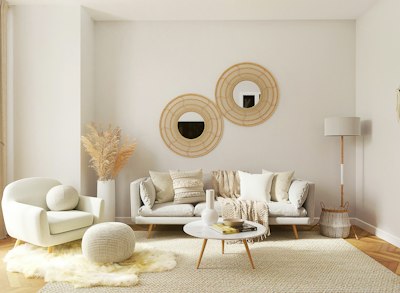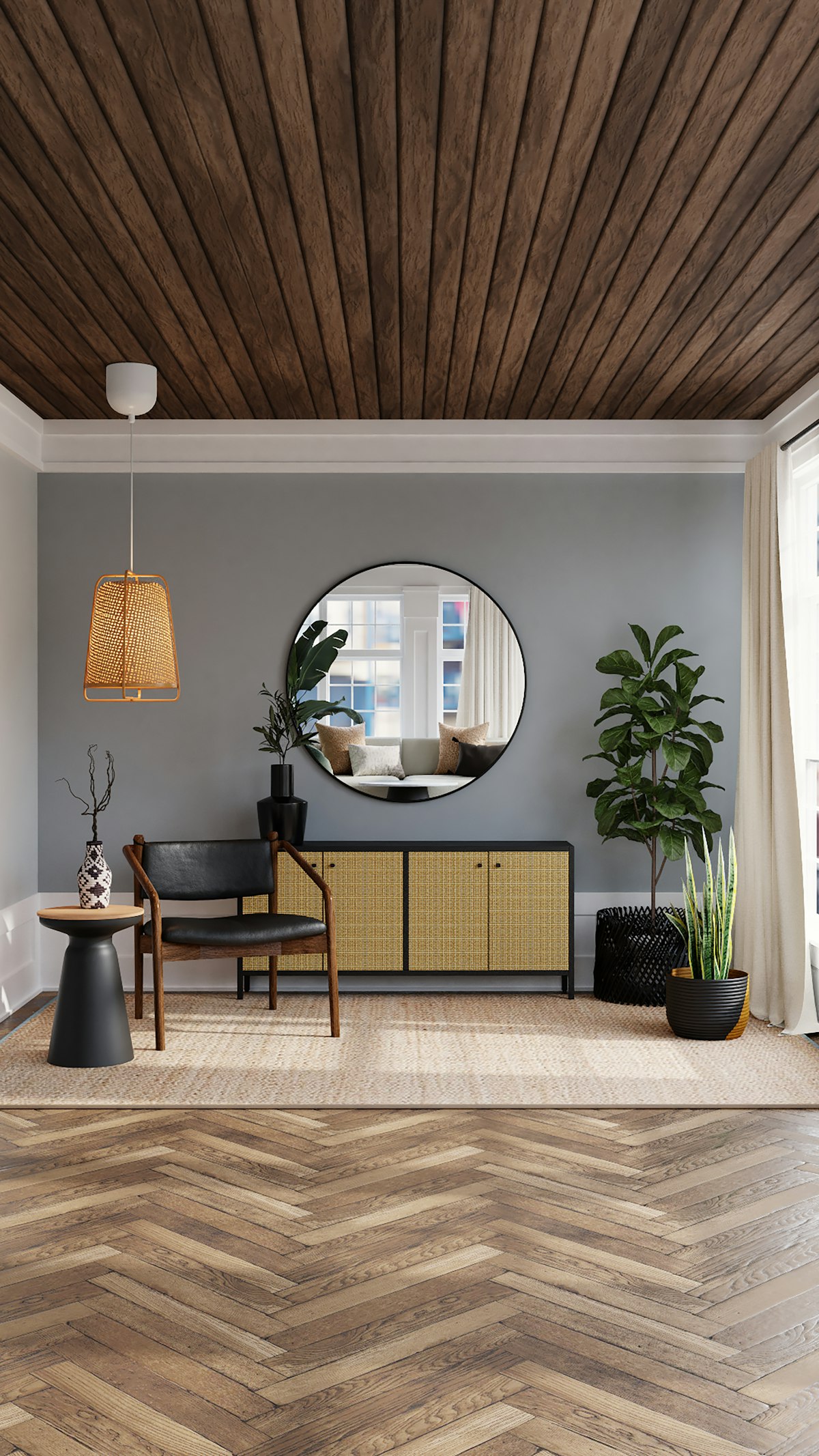
Walk into most newly renovated homes in Delhi NCR and you'll notice the same thing: one wall does all the work while the rest stay quiet. That's the accent wall design idea at its simplest — a single feature wall carrying colour, texture, or pattern so the rest of the room can stay calm and functional. Done well, it's the highest-impact, lowest-disruption upgrade available to most Indian homeowners. Done badly, it turns into a mismatched patch that fights with the sofa, the flooring, and the false ceiling all at once.
This guide walks through how to choose the right wall, the material and colour decisions that actually hold up in Indian homes, and the mistakes that show up most often when clients try to DIY an accent wall without a plan.
Why an Accent Wall Design Works So Well in Indian Homes
Most Indian apartments and independent floors have compact room sizes, and a full-room colour change or wall treatment can feel overwhelming — both visually and on the budget. An accent wall design solves this by concentrating impact on one surface. It also gives you a low-risk way to introduce a bolder colour, a textured finish, or a patterned material that you wouldn't want covering four walls and a ceiling.
There's a practical reason too: a single accent wall is one of the few interior upgrades that can be completed in a few days without touching electrical points, plumbing, or civil work — which makes it a favourite for homeowners refreshing a space between larger renovation cycles.
How to Pick the Right Wall for an Accent
Not every wall deserves to be the accent. The strongest choices share one thing in common: they're the first wall your eye lands on when you enter the room.
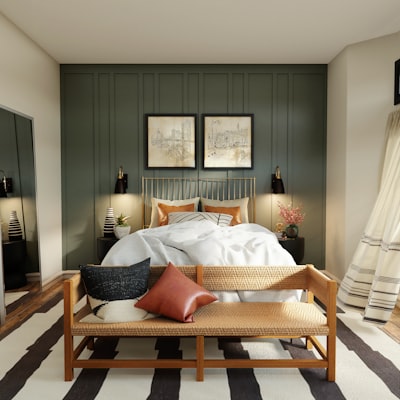
- The wall behind the sofa or headboard: In the living room, this is almost always the wall directly facing the entry point. In the bedroom, it's the wall behind the bed.
- A wall with architectural interest: A wall with a niche, a window, or a change in ceiling height naturally draws attention and rewards extra treatment.
- Avoid walls broken up by doors: A wall interrupted by a door to another room or a balcony rarely reads as a clean accent — the eye gets pulled to the opening instead of the finish.
- Avoid the wall directly behind seating that faces away from it: If nobody in the room actually looks at the wall while seated, the accent gets wasted.
In open-plan layouts — increasingly common in newer Gurgaon and Noida apartments — pick the wall that anchors the living zone rather than one shared awkwardly between the living and dining areas. Our living room interior design guide covers zoning for exactly this kind of layout.
Colour Choices That Work for Indian Light and Climate
Accent wall colours for Indian homes need to account for two things most Western design content ignores: intense natural light for much of the year, and rooms that often face north or east with limited daylight hours. A colour that looks rich in a showroom sample can read completely differently once it's on your actual wall.
- Deep, warm tones — terracotta, deep teal, forest green, and charcoal — work well in living rooms and dining areas that get good daylight, adding depth without making the space feel smaller.
- Muted, earthy shades — sage, warm sand, dusty rose — suit bedrooms and are more forgiving in rooms with less natural light, since they don't turn muddy under artificial lighting the way darker colours can.
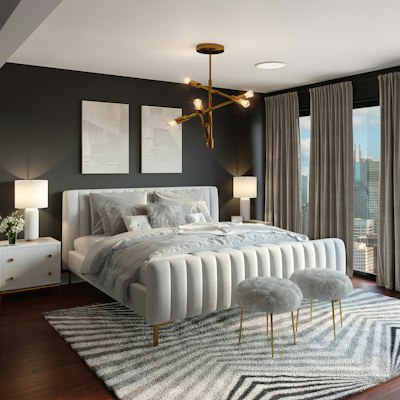
- Avoid pure black or very dark navy on a wall that receives little daylight — in low-light Indian bedrooms this often looks flat and heavy rather than dramatic.
If you're unsure which direction to go, our colour psychology guide for Indian interiors breaks down which tones suit which rooms and moods in more detail — it's worth reading before you commit to a paint code.
The single biggest mistake we see with accent walls: choosing the colour first and the wall second. Pick the wall based on sightlines, then choose a colour that complements your existing flooring and furniture — not the other way around.
Textured and Material Accent Wall Ideas
Paint isn't the only route to a strong accent wall design, and for many Indian homes, texture or material makes a bigger impact than colour alone.
Wood and PVC Panelling
Slat or fluted wood panelling has become one of the most requested accent wall ideas for living rooms and bedrooms in the last two years, largely because it looks premium without needing frequent maintenance. PVC and WPC versions handle Delhi NCR's humidity swings better than solid wood and cost considerably less. See our wall panelling ideas guide for a full breakdown of panelling styles and budgets.
Textured Paint and Plaster Finishes
Limewash, microcement, and textured plaster finishes add depth without any pattern, which suits homeowners who want something more than flat paint but find bold wallpaper too busy. These finishes also hide minor wall imperfections better than a smooth matte paint does.
Stone and Brick Cladding
Exposed brick-style cladding or natural stone veneer works particularly well behind a TV unit or in a foyer, giving a rustic-industrial look that pairs nicely with warm wood furniture. It's a heavier, more permanent choice, so it suits homeowners who aren't planning to change their interior style again soon.
Wallpaper
Wallpaper remains the fastest way to add pattern to a single wall, and Indian manufacturers now offer a wide range of moisture-resistant options suited to our climate. Botanical prints and geometric patterns are currently the most requested styles for bedrooms and home offices.
Accent Wall Ideas Room by Room
- Living room: The wall behind the sofa or the TV unit wall — whichever one is more visible from the entrance — is the strongest candidate. Panelling or a bold colour both work well here.
- Bedroom: The headboard wall is the default choice. Softer colours or subtle textured plaster tend to work better than high-contrast options, since this is a room meant for winding down.
- Dining area: A rich, saturated colour or a textured plaster finish on the wall behind the dining table adds drama for a room that's usually used in the evenings under artificial light.
- Home office or study corner: A calming sage or muted blue accent wall, paired with good task lighting, helps create visual separation for a workspace carved out of a larger room.
Common Mistakes to Avoid
Most accent wall regrets we hear about come down to a handful of avoidable errors:
- Choosing a colour that clashes with existing flooring. Always test your accent colour against your actual floor tile or wood tone, not just the wall paint of the rest of the room.
- Skipping a sample patch. Paint a test patch and view it at different times of day before committing — Indian daylight changes dramatically between morning and evening.
- Over-accenting. One accent wall per room is usually the right number. Two competing accent walls in the same space cancel each other out.
- Ignoring the false ceiling and lighting. An accent wall under poor or mismatched lighting loses most of its impact — see our false ceiling design ideas guide if you're planning lighting changes alongside your wall treatment.
Putting an Accent Wall Design Together
A well-planned accent wall design idea remains one of the most cost-effective ways to transform a room in an Indian home — it needs no civil work, can usually be finished in a few days, and gives you a low-risk way to experiment with colour, texture, or material before committing to a bigger renovation. Start by identifying the wall your eye naturally lands on, choose a colour or material that complements what's already in the room rather than fighting it, and always test before you commit. If you're planning a bigger refresh around the same time — say, before the festive season — our Diwali home renovation planning guide covers how to sequence an accent wall alongside other quick upgrades.
Thinking about your own space?
Our designers can walk you through exactly what this looks like for your home — let's talk.
Book a Free Consultation