If there is one design upgrade that has dominated Indian home interiors over the last three years, it is wall panelling. From fluted WPC panels behind a TV unit to upholstered headboard walls in master bedrooms, wall panelling ideas for Indian homes have moved from the portfolio pages of premium design studios into mainstream renovation conversations in Delhi NCR and across the country. The reasons are not hard to understand: a panelled wall adds texture, depth, and a sense of deliberate craftsmanship that no amount of paint colour can replicate.
Wall panelling is also one of the most flexible interventions available to a homeowner. It can be applied to a single accent wall in a small apartment or installed floor-to-ceiling across an entire drawing room. It works in rentals (with the right material choices) and in owned homes alike. And critically for India's climate — particularly in the scorching summers and humid monsoons of Delhi NCR — the right wall panelling materials are far more durable and maintenance-friendly than they might appear.
This guide covers the main wall panelling materials available in India, how to apply them room by room, typical costs, and what to watch for during installation.
Why Wall Panelling Works So Well in Indian Interiors
Indian homes, particularly apartments in gated communities across Delhi, Gurugram, Noida, and Faridabad, share a common spatial challenge: relatively generous floor areas but bland, flat finishes on walls and ceilings that make spaces feel generic despite their size. Builder-grade plaster-and-paint walls are neutral by commercial necessity — they need to appeal to the widest possible buyer. Wall panelling is the single most effective way to move a space from builder grade to boutique, and it can be done after possession without structural changes.
Beyond aesthetics, wall panelling serves real functional purposes. Upholstered fabric panels provide sound absorption in home theatres and bedrooms. WPC and MDF panels add a layer of thermal insulation on exterior-facing walls. Panelling can also conceal uneven plaster, old paint marks, or utility runs that would otherwise require a full replastering job.
A single panelled wall can do more for the perceived quality of a room than a complete furniture upgrade. Texture and material create the impression of considered design — paint alone cannot.
Wall Panelling Materials Available in India: A Comparison
The Indian market now offers a wide range of wall panelling materials at different price points. Understanding what each material does well — and where it falls short — is the most important step in choosing the right option for your home.
WPC (Wood Plastic Composite) Fluted Panels
WPC fluted panels have become the most popular wall panelling choice in Indian homes over the last two to three years, and for good reason. They are waterproof, termite-proof, and dimensionally stable in India's temperature extremes — properties that natural wood simply cannot offer at a comparable price point. WPC panels are available in a wide range of finishes (walnut, oak, charcoal, ivory, and more) and are typically 12–18 mm thick, making them light enough to be wall-mounted with adhesive and screws without loading the structure. Cost in India ranges from ₹180 to ₹380 per square foot installed, depending on the finish and city.
MDF Fluted and Groove Panels
Medium-density fibreboard panels, routed into fluted or groove profiles, offer excellent paint-ability and a cleaner, more architectural look than WPC. MDF takes paint uniformly, which means you can match any wall colour precisely — ideal if you want the panelling to read as an integral part of the wall rather than a contrasting material. The critical caveat in India: MDF is susceptible to moisture swelling. Use moisture-resistant (MR grade) MDF and avoid installing it in bathrooms, near kitchen splashbacks, or on walls with any history of dampness. Installed cost: ₹140–₹280 per square foot.
PU Foam and Polyurethane Panels
Lightweight PU panels are moulded to mimic classic European wainscoting profiles — raised rectangular panels, beadboard patterns, and ornate cornicing. They are extremely easy to install (adhesive only, no screws), lightweight, and available at low cost (₹60–₹140 per square foot). The limitation is that PU panels have a slightly hollow feel and may dent if subjected to impact. They work beautifully in low-traffic areas like bedrooms and drawing rooms, but are less appropriate for high-traffic corridors or children's rooms.
Natural Wood Veneer Panels
For homeowners who want genuine wood warmth and grain variation, real wood veneer panels — applied over an MDF substrate — deliver a premium result that no engineered alternative truly matches. Teak, walnut, and oak veneers are the most common choices in Indian homes. Expect to pay ₹350–₹600 per square foot installed, and plan for annual maintenance with a wood conditioner to prevent the veneer from drying and cracking in Delhi's low-humidity winters. Veneer panels are best suited for living rooms and master bedrooms where they will be seen and appreciated.
Fabric-Upholstered Panels
Upholstered wall panels — fabric or leatherette stretched over a foam-padded frame and fixed to the wall — are primarily used for headboard feature walls in master bedrooms and soundproofing panels in home theatres. They add a level of tactile softness that no hard-surface material can match. In Delhi NCR's dusty environment, choose tightly woven fabrics rather than open-weave textiles, and opt for easy-clean leatherette in rooms where children or pets are present. Installed cost: ₹250–₹500 per square foot depending on fabric grade.
Living Room Wall Panelling Ideas
The living room is where wall panelling makes its most visible impact, and also where homeowners face the most choices. The two most common applications in Indian living rooms are the TV feature wall and the sofa back wall.
- TV feature wall with fluted panels: A floor-to-ceiling fluted WPC panel wall behind the television unit is the defining look of contemporary Indian home design right now. Use a darker finish (charcoal, dark walnut) to make the television recede visually, and pair it with concealed LED strip lighting along the floor and top cove to add depth. This wall alone can transform the character of an entire room.
- Sofa back wall with raised panel moulding: If the TV wall is already a focal point, keep the sofa back wall more subtle — a light-coloured PU moulded panel or a painted MDF grid pattern adds texture without competing. This treatment works especially well in drawing rooms that double as formal sitting areas.
- Half-height wainscoting: For living rooms that need a classic, slightly formal register — common in independent homes in South Delhi and Golf Course Road — half-height wainscoting (panelling up to dado level, approximately 90 cm from the floor) with a different paint colour above creates a layered, traditional look that suits both Indian and transitional interiors.
- Single accent wall in contrast colour: Paint the fluted or groove MDF panel a contrasting colour to the rest of the room. A deep forest green, navy, or terracotta panelled accent wall against neutral surrounding walls is a high-impact, relatively low-cost statement.
Bedroom Feature Wall: The Headboard Wall Panel
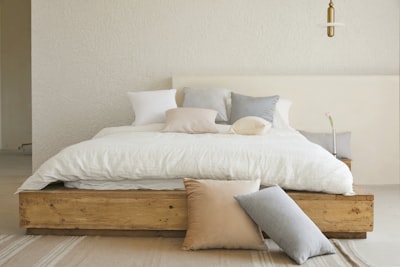
In master bedroom interior design, the headboard wall is the natural location for the room's most considered surface treatment. This is the wall you face when lying in bed — it should feel intentional, warm, and restful rather than blank and incidental.
- Upholstered headboard panel: An upholstered panel, floor-to-ceiling or to picture-rail height, creates a cocoon-like softness that is genuinely relaxing to be in. Use a fabric that complements the bedding rather than matching it exactly — tone-on-tone is more sophisticated than a direct match.
- Fluted WPC with integrated wall sconces: A fluted panel wall with recessed channels for wall-mounted bedside lights is a practical and elegant solution. The sconces become part of the wall surface rather than accessories bolted onto it — a detail that separates designed bedrooms from merely furnished ones.
- Painted MDF grid panel: A simple grid or raised rectangular panel pattern in the same colour as the wall (tone-on-tone) adds subtle architectural character without overwhelming the room. This is the right choice when you want the room to feel considered but calm rather than dramatic.
- Children's bedrooms: For kids' rooms, use durable, scrubbable WPC panels in soft, playful colours. Avoid upholstered panels in children's rooms — they collect dust and are difficult to clean.
Dining Area and Foyer: Panelling That Makes an Entrance
The foyer or entrance of a home sets the tone for everything beyond it. A panelled entrance wall — even a narrow one — immediately signals that the home has been designed rather than simply furnished. In Delhi NCR apartments where the entrance lobby is often a tight corridor, half-height panelling with a contrasting colour above, or a single dramatic panel wall at the end of the corridor, transforms what is typically an afterthought into a genuine design moment.
In the dining area, a textured wall behind the dining table creates a backdrop that makes meals feel more like occasions. Lime-washed plaster-effect panels, natural wood veneer sections, or even a simple fluted panel wall in a muted tone all work well. Avoid anything too porous or textured on dining walls — food splatter and steam from the adjacent kitchen are real concerns in most Indian home layouts.
Home Office and Study Room Wall Panelling
With hybrid work becoming permanent in Delhi NCR's professional class, the home office deserves as much design attention as the living room. Wall panelling in a home office serves two purposes: it creates a professional backdrop for video calls, and it improves the acoustics of what is often a small room with hard surfaces that cause echo and audio harshness.
- Feature wall behind the desk: A panelled wall behind the desk chair — visible in every video call — is the most impactful single upgrade for a work-from-home setup. Choose a panel finish that reads well on camera: medium-dark tones with visible texture (fluted or groove pattern) look more interesting than flat surfaces without appearing distracting.
- Acoustic fabric panels: For anyone who works with clients over video or audio, fabric-wrapped acoustic panels on the side walls reduce echo significantly. They do not need to be large — even two 600×1200 mm panels on either side of the desk make a noticeable difference in call quality.
- Built-in shelving integrated with panelling: Floating shelves or a bookshelf integrated into the panel grid creates a functional and visually rich backdrop that works beautifully for video calls while providing genuine storage.
Wall Panelling Costs in India: What to Budget
Wall panelling costs in India vary considerably based on material, finish, profile complexity, and city. Here is a realistic range for installed costs in Delhi NCR as of mid-2026:
- PU moulded panels: ₹60–₹140 per sq ft (material + installation)
- MDF fluted / groove panels (MR grade, painted): ₹140–₹280 per sq ft
- WPC fluted panels (standard finish): ₹180–₹320 per sq ft
- WPC fluted panels (premium woodgrain finish): ₹280–₹420 per sq ft
- Natural wood veneer panels: ₹350–₹600 per sq ft
- Fabric-upholstered panels: ₹250–₹500 per sq ft
For a typical 10×12 ft accent wall (approximately 120 sq ft), a mid-range WPC fluted panel installation would cost ₹25,000–₹45,000 including material and labour. A natural veneer feature wall of the same size would range from ₹45,000 to ₹75,000. These are among the best returns-on-investment in home interiors: the visual impact per rupee spent is exceptionally high.
Maintenance and Climate Considerations for Delhi NCR
Delhi's climate presents specific challenges for wall materials. Summers bring extreme heat and low humidity; monsoon brings high humidity and dust; winters are dry and occasionally foggy. Here is what to keep in mind for each material in this context:
- WPC panels are the most climate-resilient option for Delhi NCR. They do not expand, contract, or warp with humidity changes, making them ideal for exterior-facing walls and air-conditioned rooms where temperature swings are most pronounced.
- MDF panels must use MR (moisture-resistant) grade boards. Even so, avoid installing MDF panelling on walls that receive direct water contact or prolonged condensation — a common issue on north-facing walls in Delhi winters.
- Natural wood veneer should be sealed with a UV-protective lacquer to prevent the veneer from fading or drying and cracking in summer. Apply a wood conditioner once a year in late October before winter sets in.
- Fabric-upholstered panels attract dust in Delhi's notoriously dusty atmosphere. Vacuum with a soft brush attachment every two to three weeks, and spot-clean immediately if anything spills. Consider removable panel covers if you want the option to refresh the fabric without a full reinstall.
For cleaning, all hard-surface panels (WPC, MDF, veneer) can be wiped with a lightly damp microfibre cloth. Avoid abrasive cleaners, which will scratch even matte finishes. For fluted panels, a soft brush or a vacuum with a narrow attachment is useful for clearing dust from the grooves — Delhi dust settles into recessed profiles more readily than it does on flat surfaces.
Wall Panelling Design Checklist for Indian Homes
Wall panelling ideas for Indian homes are most successful when planned as part of the overall interior scheme rather than added as an afterthought. Before your installer begins, work through this checklist:
- Moisture check first: Inspect the wall for any signs of seepage, dampness, or efflorescence before panelling. Address any waterproofing issues before installation — covering a damp wall traps moisture and leads to mould and panel failure.
- Electrical routing: If you plan to integrate wall sconces, LED strips, or sockets behind or within the panelling, finalise the electrical routing before panels go up. Retrofitting electrical work through an installed panel wall is difficult and disruptive.
- Panel direction: Vertical flutes make a room feel taller; horizontal grooves make it feel wider. Choose based on the ceiling height and room proportions, not just the trend.
- Finish and colour before installation: If you are using paintable MDF panels, paint them (or have them lacquered) before installation. Painting after installation means paint running into grooves and uneven finish on the edges.
- Sample on the wall: Request a 300×300 mm sample from your supplier and live with it on the wall for a day before approving the order. Materials look different on the wall at scale than they do as small samples under shop lighting.
- Proportion: Full-height panelling works in rooms with at least 9-foot ceilings. In standard Indian apartments with 8.5-foot ceilings, consider panelling to three-quarters height (6–6.5 feet) to avoid a cramped feel.
Wall panelling ideas for Indian homes are among the most transformative and accessible upgrades available today. Whether you are refreshing a single bedroom accent wall or redesigning a complete living room, the right panelling material — chosen for your climate, your room's proportions, and your lifestyle — elevates every element it shares a space with. At Re:Room, we include wall treatment planning as a core element of every living room design and bedroom project we undertake, because we know it is the detail that most reliably transforms how a finished space feels to live in.
Want a wall that stops guests in their tracks?
Our designers create bespoke wall panelling plans tailored to your room's proportions, climate needs, and budget. Let us help you choose the right material and finish the first time.
Book a Free ConsultationFrequently asked questions.
What is the best wall panelling material for Delhi NCR's climate?
WPC (Wood Plastic Composite) fluted panels are the most climate-resilient option — they're waterproof, termite-proof, and don't expand, contract, or warp with humidity changes, making them ideal for exterior-facing walls and air-conditioned rooms. MDF panels can also work well if you specify MR (moisture-resistant) grade, but should be avoided on walls with any history of dampness.
How much does wall panelling cost per square foot in India?
It varies widely by material: PU moulded panels run ₹60–₹140 per sq ft, MDF fluted or groove panels ₹140–₹280, WPC fluted panels ₹180–₹420 depending on finish, natural wood veneer ₹350–₹600, and fabric-upholstered panels ₹250–₹500. For a typical 10×12 ft accent wall (about 120 sq ft), a mid-range WPC installation costs roughly ₹25,000–₹45,000 including material and labour.
Can I do full-height wall panelling in a standard Indian apartment?
Full-height panelling works best in rooms with at least 9-foot ceilings. In standard Indian apartments with 8.5-foot ceilings, panelling to three-quarters height (roughly 6–6.5 feet) avoids a cramped feel while still delivering the visual impact.
Is MDF wall panelling safe to use in a humid climate like Delhi's?
Use MR (moisture-resistant) grade MDF, and avoid installing it on walls that receive direct water contact or prolonged condensation, such as north-facing walls in Delhi winters or bathroom-adjacent surfaces. For genuinely wet or exterior-facing walls, WPC panels are the more climate-resilient choice since they don't swell with humidity.