Rental home interior design in India is a different discipline from designing a home you own — the goal isn't a permanent transformation, it's making a space feel genuinely yours while staying reversible. Most rental agreements in Delhi NCR come with a security deposit equal to two or three months' rent, and landlords routinely deduct from it for drilled walls, painted-over accent colours, or fixtures that weren't there at move-in. That leaves tenants stuck between two bad options: living in a flat that never feels personal, or risking a chunk of their deposit to make it feel like home.
There's a middle path, and it comes down to choosing changes that are easy to undo. This guide walks through what you can realistically change in a rented Indian home, what to avoid, and how to get a flat that looks and feels designed — without a single hole that outlasts the lease.
Why Rental Home Interior Design in India Needs a Different Approach
Owned-home interior design starts from the assumption that every change is permanent — a false ceiling, a modular kitchen, a knocked-down wall. Rental home interior design in India starts from the opposite assumption: everything you add has to come off cleanly when you move out, whether that's in eleven months or three years.
This isn't just about protecting your deposit. Most landlords in Delhi NCR, Gurgaon, and Noida are cautious about tenants making structural or semi-permanent changes without written permission, and clauses restricting nailing, drilling, or repainting are common in standard rent agreements. Reading your lease carefully before you buy a single item saves a lot of back-and-forth later — some landlords are genuinely flexible if you ask first, and a quick conversation up front is far cheaper than a dispute at move-out.
What You Can (and Can't) Change in a Rented Flat
Before spending on decor, it helps to sort possible changes into three buckets: safe, ask-first, and avoid.
- Safe (no permission usually needed): Furniture, rugs, curtains, removable wall decor, plants, lighting that plugs into existing points, and anything free-standing.
- Ask first: Painting a wall, installing curtain rods or blinds, mounting shelves, swapping light fixtures, or adding a chimney or geyser.
- Avoid unless it's your own long-term lease with written consent: Breaking or moving walls, changing plumbing or electrical wiring, replacing flooring, or altering the kitchen layout.
Getting this sorted early prevents the most common rental interior mistake: spending money on something that has to be removed — or paid for — the day you hand back the keys.
Paint, Walls & Removable Finishes
Walls have the biggest visual impact on how a home feels, and they're also the area landlords are most protective of. Repainting an entire rented flat is rarely worth the cost and risk unless your landlord has explicitly agreed to it in writing. A better renter-friendly alternative is peel-and-stick wallpaper or removable wall panels on a single accent wall — both have become widely available online in India in the last few years, come in a huge range of finishes from textured stone to warm wood tones, and peel off cleanly without damaging the underlying paint.
Large framed art, a leaning mirror, or a fabric wall hanging can do a similar job without touching the wall at all. Command strips rated for the weight of the item are strong enough for most framed prints and light mirrors, and they come off without leaving marks when used correctly. Our guide on colour psychology for Indian homes is a useful reference for choosing wallpaper and decor tones that make a small rented room feel calmer and larger, even without repainting a single wall.
Furniture That Travels With You
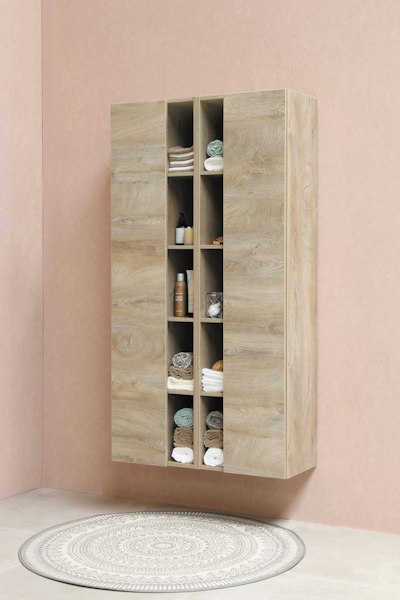
In rental home interior design, furniture is your biggest lever — it's the one category you have complete control over, and it's the first thing that comes with you to the next flat. The most practical strategy is to buy modular, freestanding pieces over anything built-in: a bookshelf on legs instead of wall-mounted units, a bed frame rather than a fitted platform bed, and a wardrobe that can be disassembled and moved rather than a carpenter-built one fixed to the room.
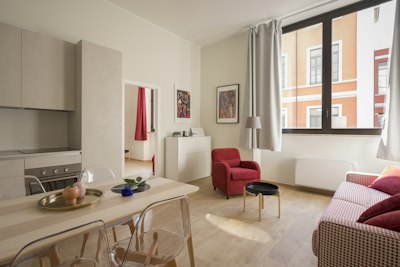
Multi-functional furniture matters even more in a rental, since most Indian rental flats — especially 1BHK and 2BHK units in Delhi NCR — are compact. A storage ottoman, a foldable dining table, or a sofa-cum-bed lets a small rented space do more without needing extra furniture that's a headache to move later. Our furniture layout guide for Indian homes covers how to arrange pieces for flow and function, which applies just as directly to a rented flat as an owned one — arguably more, since there's rarely room to experiment twice.
The best rental interior design decisions are the ones you'd make again even if you owned the place — they just happen to also pack up in an afternoon.
Lighting Upgrades You Can Undo
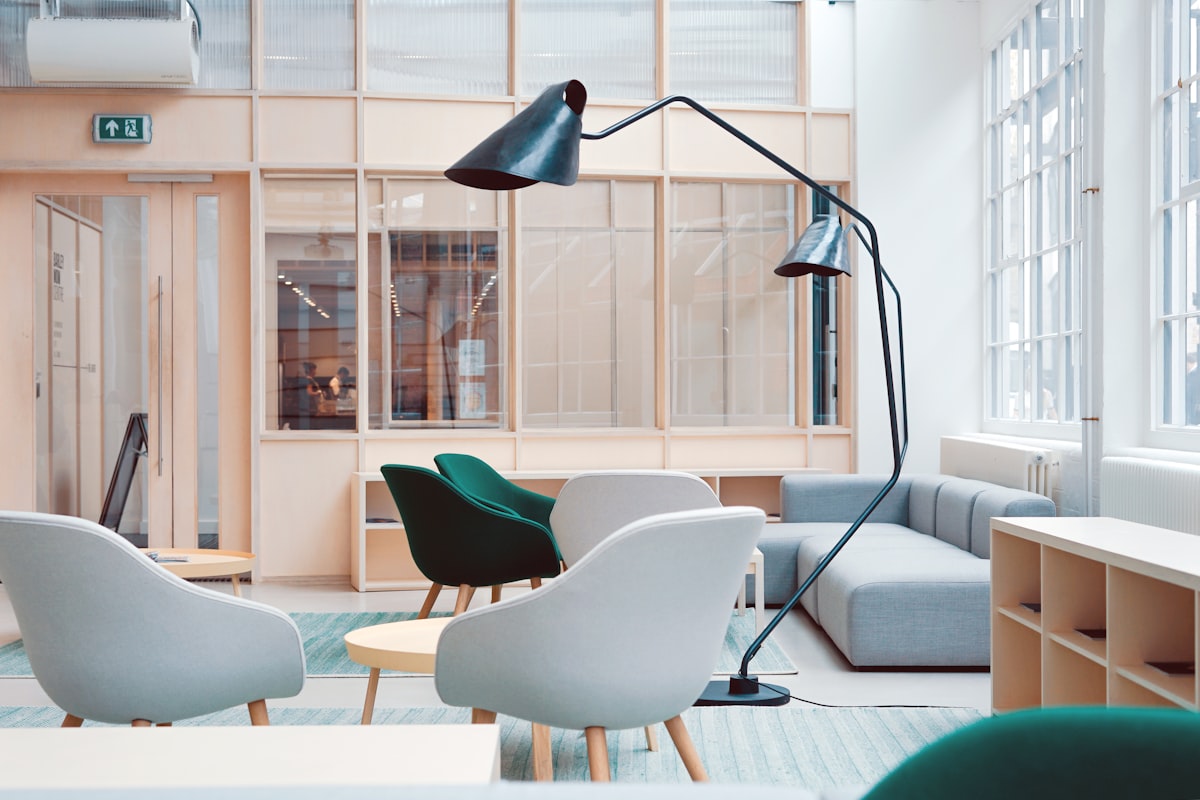
Most rented flats in India come with a single harsh ceiling light per room, which is functional but rarely flattering. The fix doesn't require an electrician or a landlord's sign-off: floor lamps, table lamps, and plug-in string lights layered around the room create warmth that a single overhead bulb never can. If the existing fixture is genuinely unusable, some renters swap it for a nicer one and simply keep the original safely stored to reinstall before moving out — a straightforward, fully reversible upgrade as long as the wiring itself isn't touched.
Battery-powered or plug-in LED strip lights under shelves or behind a TV console add a hotel-like glow without any wiring work at all, and they unplug in seconds when it's time to leave.
Storage & Organisation Without Drilling
Storage is often the biggest complaint about rented flats in India — older buildings in particular tend to have shallow, poorly designed wardrobes and no built-in kitchen storage at all. Freestanding solutions solve this without a single drilled hole: stackable modular cabinets, over-the-door organisers, tension rods inside cupboards to double hanging space, and slim rolling carts that slot into narrow kitchen gaps.
Our dedicated guide to smart storage solutions for small apartments has more room-by-room ideas, and nearly all of them work in a rented flat as-is, since the core idea — storage built into furniture rather than the walls — is inherently renter-friendly.
Curtains as a Quick Personalisation Win
Swapping out a landlord's dated curtains for your own is one of the highest-impact, lowest-effort changes in rental home interior design in India. A tension rod fits inside most window frames without any drilling, and good curtains instantly change the mood of a room. Our guide to curtains and window treatments for Indian homes covers fabric weights and styles suited to Delhi NCR's climate, all of which apply whether you own the flat or not.
Budgeting for a Rental Interior in Delhi NCR
Because nothing in rental home interior design is permanent, it's worth resisting the temptation to overspend on any single piece — a rented flat's decor should ideally still make sense financially if you move again in a year or two. Prioritise spend on furniture and lighting you'll genuinely reuse in your next home, and keep decor purchases (art, cushions, rugs) as the more flexible, lower-cost layer that can change with each new space. Our broader interior design budgeting guide is written for owned homes but the prioritisation logic — spend on what lasts, save on what's decorative — holds just as well for a rental.
Getting Your Deposit Back: A Quick Checklist
A little discipline at move-in and move-out protects the deposit far more reliably than any decor choice. A few habits go a long way:
- Photograph every wall, fixture, and fitting on move-in day, with a date stamp, before adding anything.
- Get any painting, mounting, or fixture change approved by the landlord in writing, even over WhatsApp.
- Keep original fixtures (light fittings, curtain rods, cabinet handles) stored safely to reinstall before you leave.
- Use removable adhesives and tension-fit solutions rather than nails or masonry drills wherever possible.
- Do a final walkthrough with the landlord and address any damage before handing back the keys, rather than after.
Making a Rented Flat Feel Like Home
Good rental home interior design in India isn't about doing less than an owned home deserves — it's about choosing the right category of change. Furniture, lighting, textiles, and freestanding storage can transform how a rented flat feels almost as completely as a full renovation, and every one of those choices comes with you to the next address instead of disappearing into a landlord's deduction. Get the reversible basics right, and a rented flat in Delhi NCR can feel every bit as considered and personal as a home you own outright.
Renting but want it to feel like home?
Our designers know how to work within a rental's constraints — let's talk about your space.
Book a Free ConsultationFrequently asked questions.
What changes can I make to a rented flat in India without losing my deposit?
Furniture, rugs, curtains, removable wall decor, plants, and lighting that plugs into existing points are generally safe with no permission needed. Painting a wall, installing curtain rods or blinds, mounting shelves, or swapping light fixtures should be asked about first — and breaking or moving walls, changing plumbing or electrical wiring, or replacing flooring should be avoided entirely in a rental.
Can I put up wallpaper in a rented apartment?
Yes — peel-and-stick wallpaper or removable wall panels on a single accent wall are the renter-friendly alternative to repainting. They come in a huge range of finishes and peel off cleanly without damaging the underlying paint, which a full repaint rarely does without your landlord's written agreement.
How do I hang curtains in a rented flat without drilling?
A tension rod fits inside most window frames without any drilling, and swapping a landlord's dated curtains for your own is one of the highest-impact, lowest-effort changes you can make in a rented home.
How do I protect my security deposit when I move out?
Photograph every wall, fixture, and fitting on move-in day with a date stamp before adding anything, get any painting or mounting approved by the landlord in writing (even over WhatsApp), keep original fixtures stored safely to reinstall, and use removable adhesives or tension-fit solutions instead of nails or masonry drills wherever possible.